
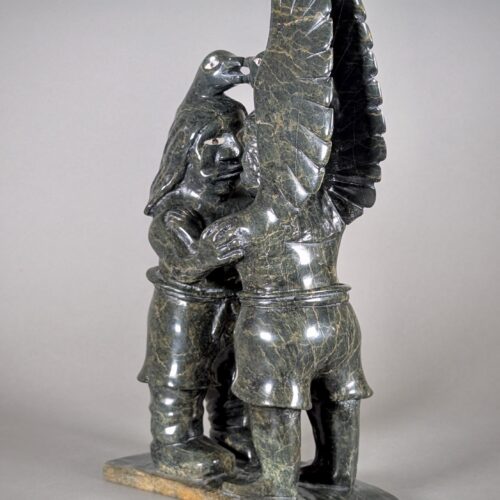
Artist biography:
Jomie Aipeelie was born on September 11, 1963 in Iqaluit on Baffin Island in the Nunavut. He has spent most of his life in Iqaluit but has also spent considerable time in Lake Harbour while visiting relatives.
He was the son of artist Seepee Ipellie, and the grandson of Nuveeya Ipellie. Note that Aipeelie spelled his name differently from his father.
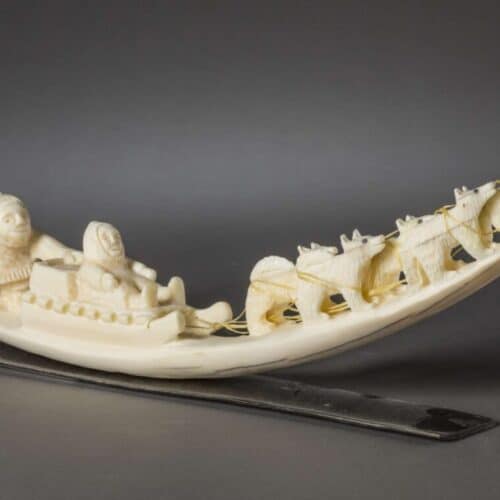
Aipeelie completed his education at grade 8 and went to work at the Ministry of Transport as a carpenter. He started carving at the age of 15 becoming serious about his art at about 22. Aipeelie comes from a traditional style family background, spending time out on the land both in winter and summer. He continuds the traditional way of life – hunting for seals, walrus, caribou, ptarmigan and geese.
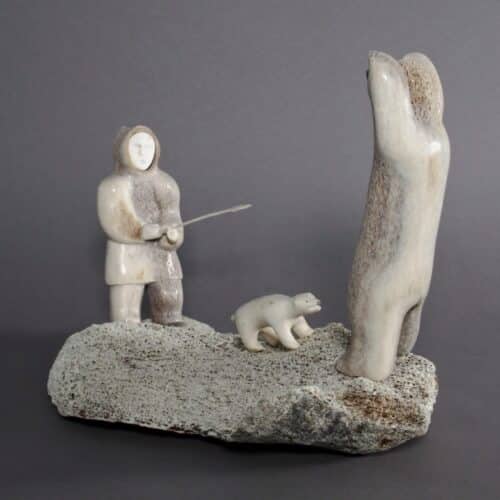
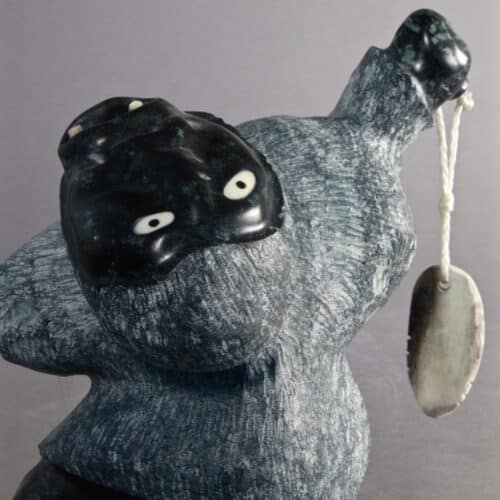
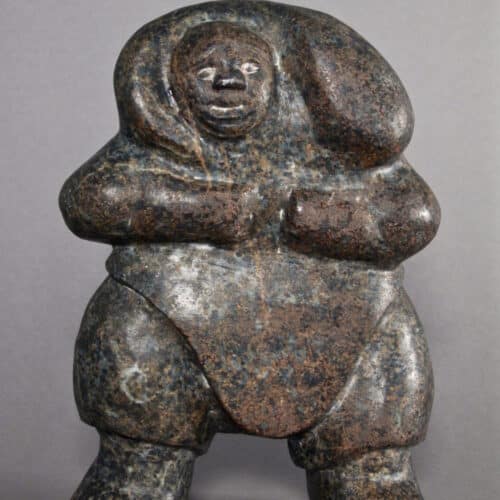
Like his father and grandfather, Aipeelie liked to carve muskoxen, as well as whales, hawks, polar bear, seals, narwhal, ducks, walrus, inukshuks and hunters. His work is very strong and direct.
source: katilivik.com
About throat singing:
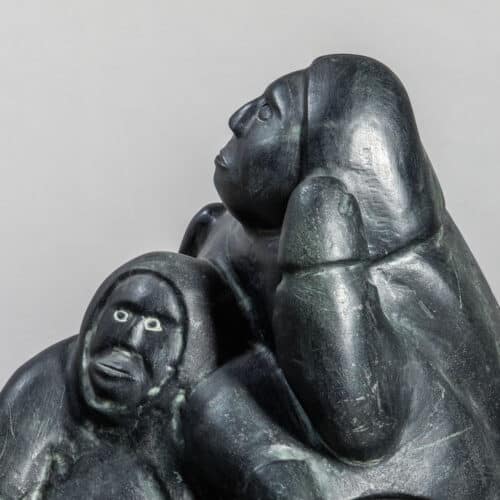
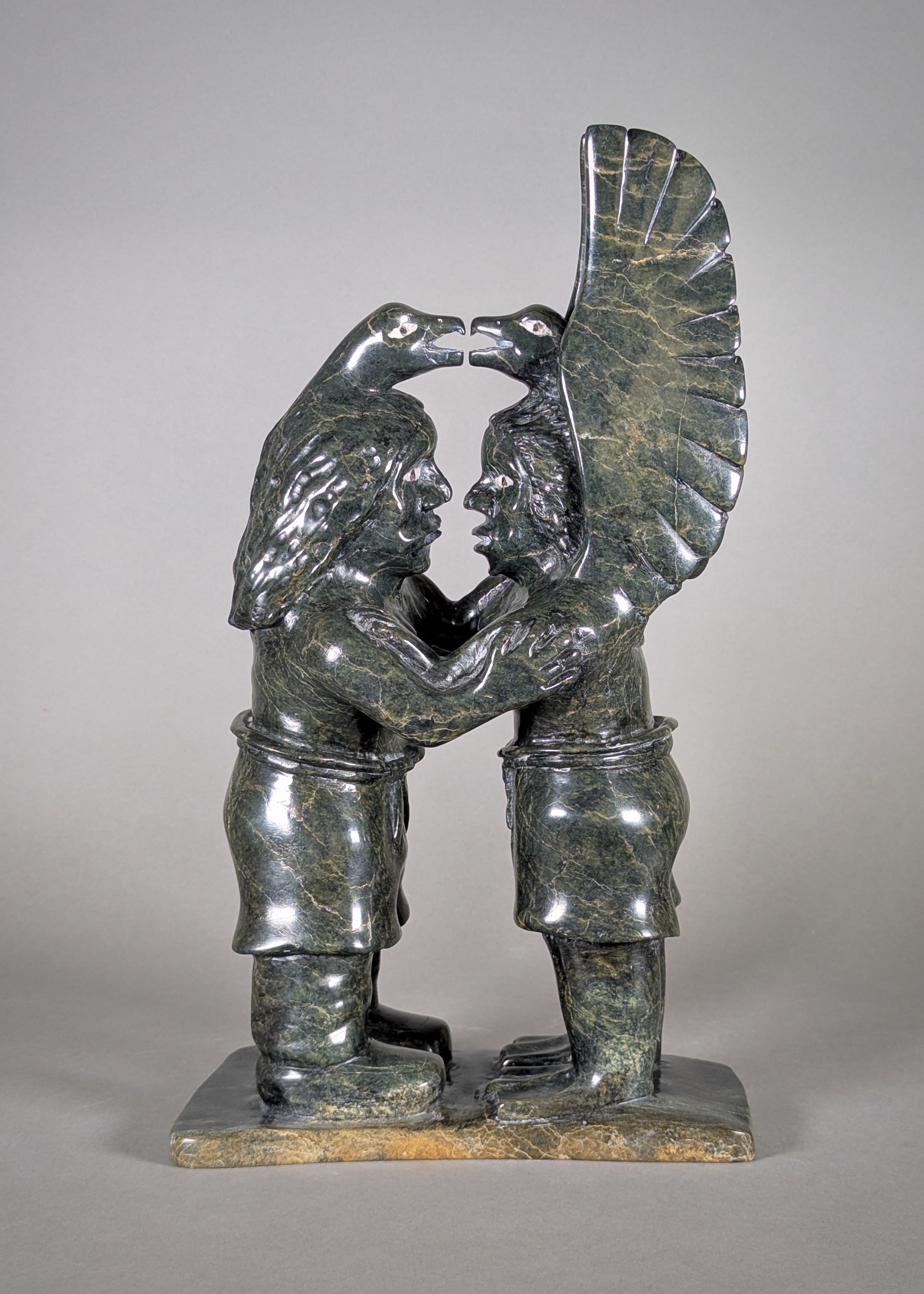
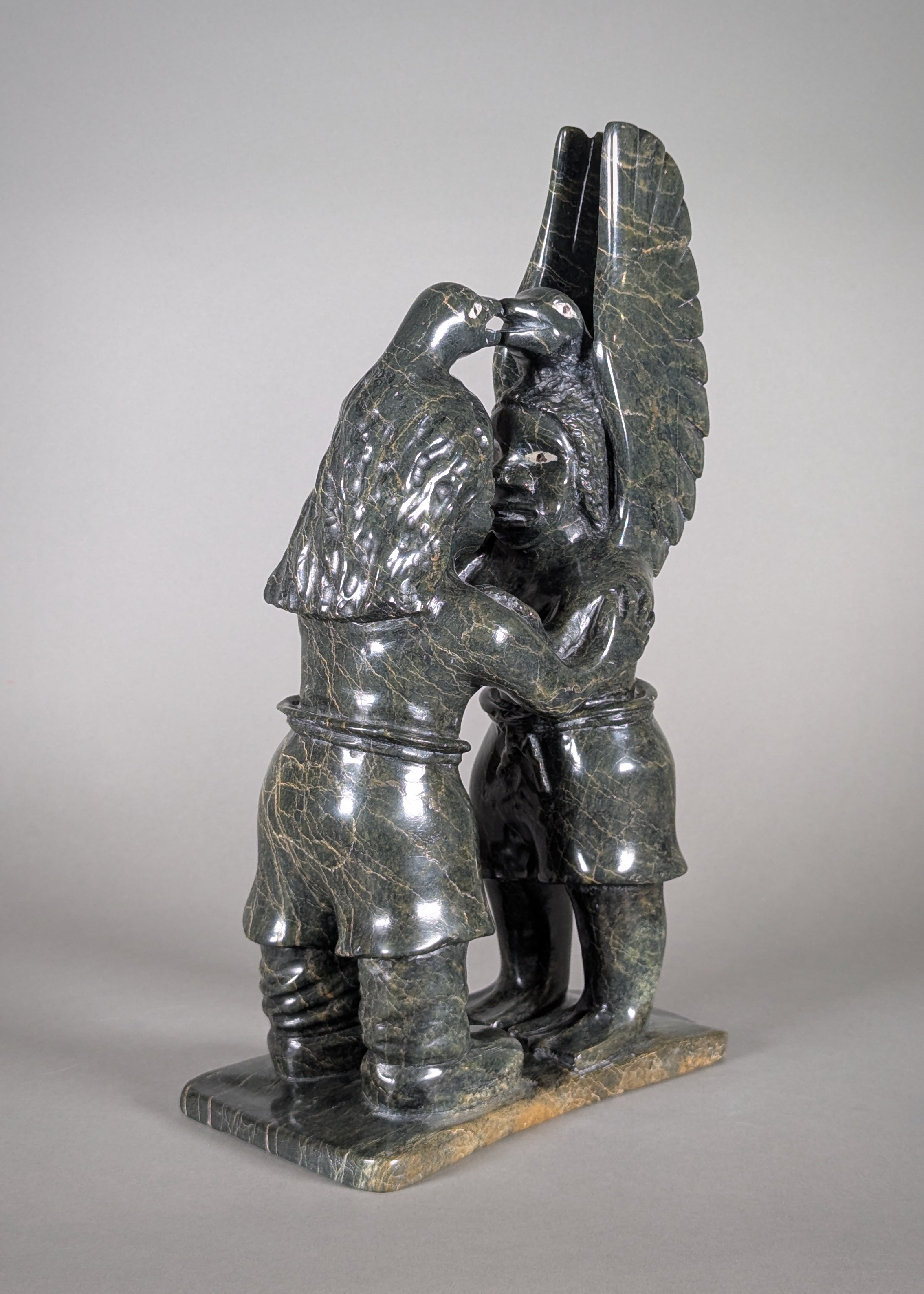
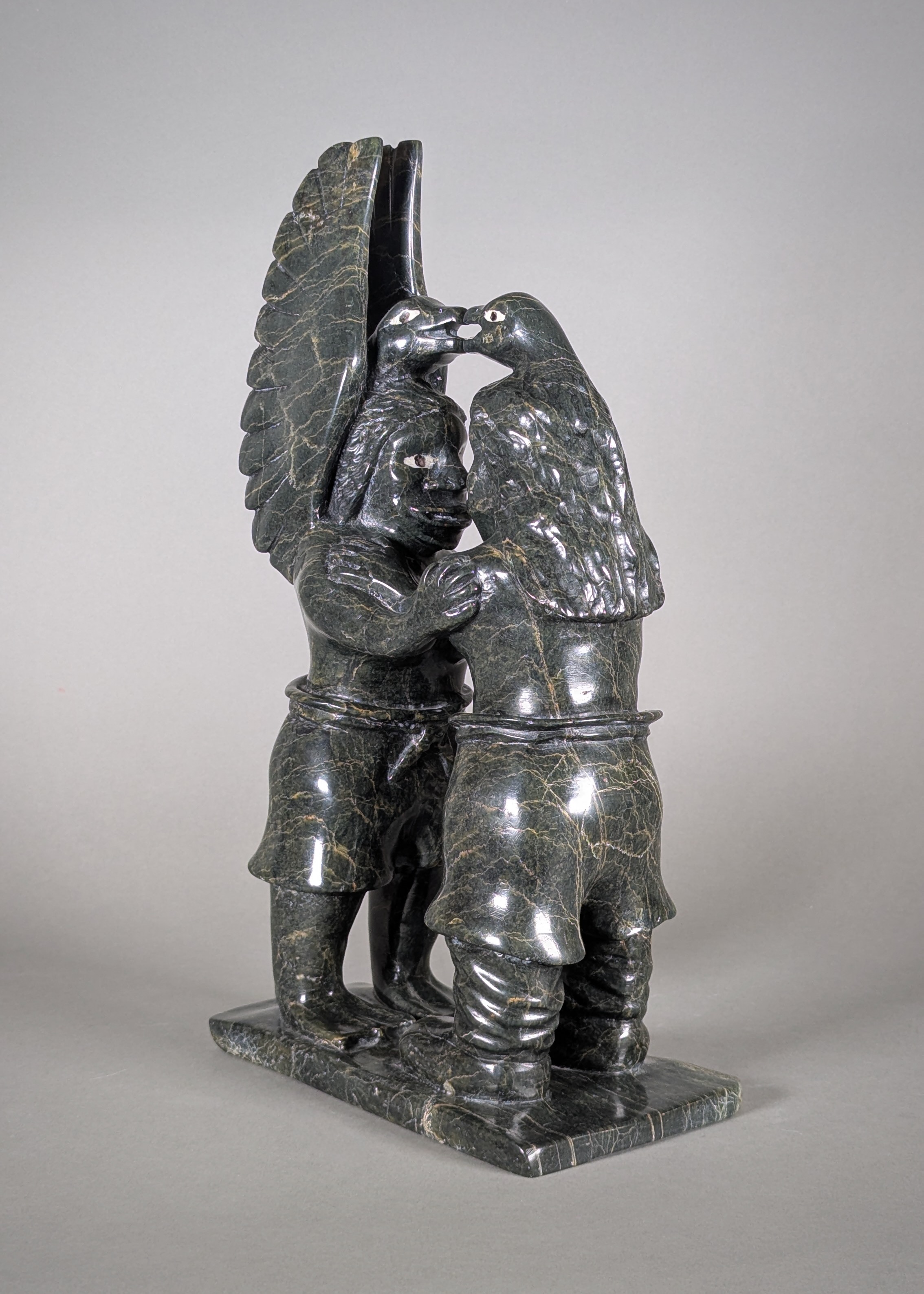
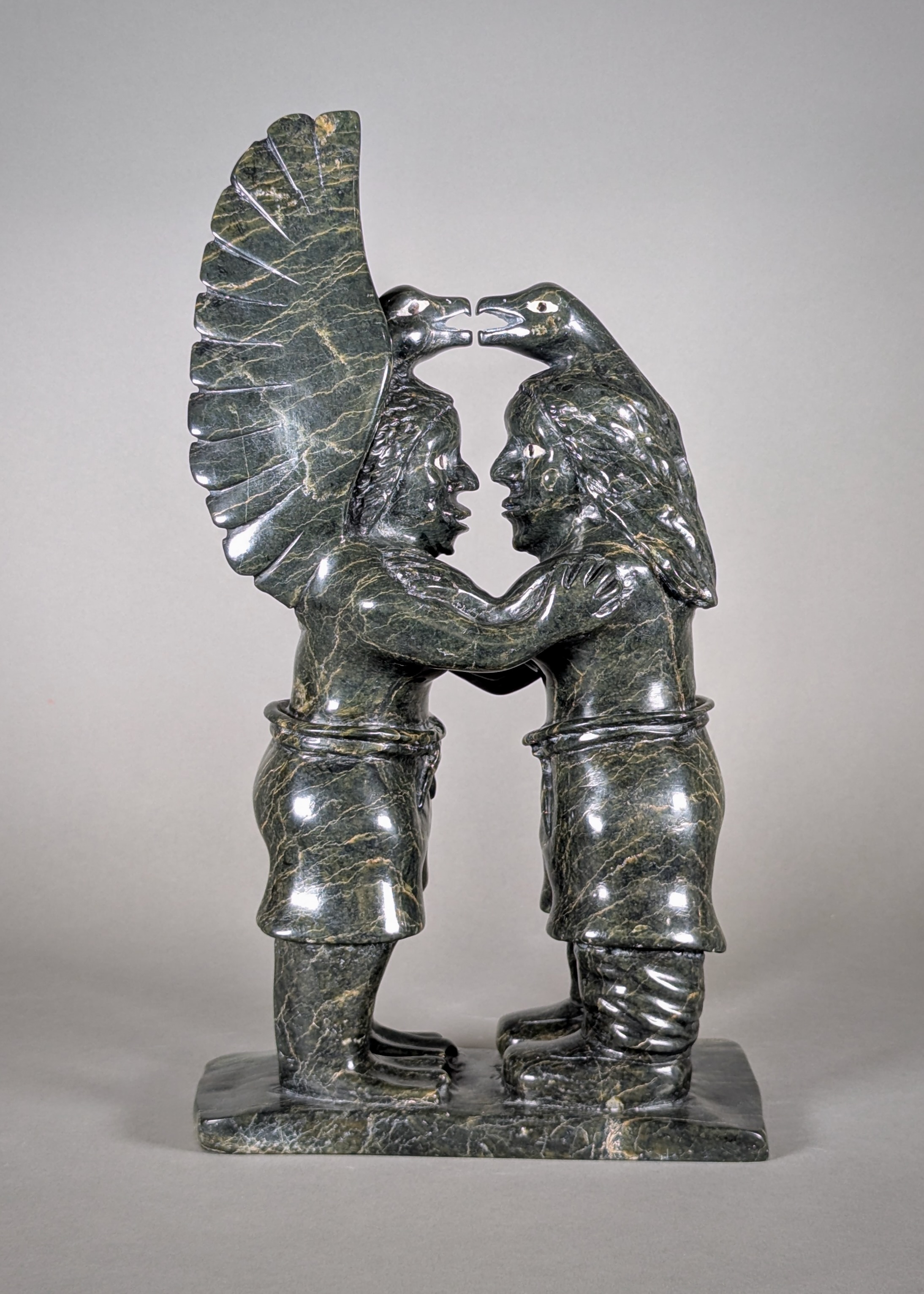
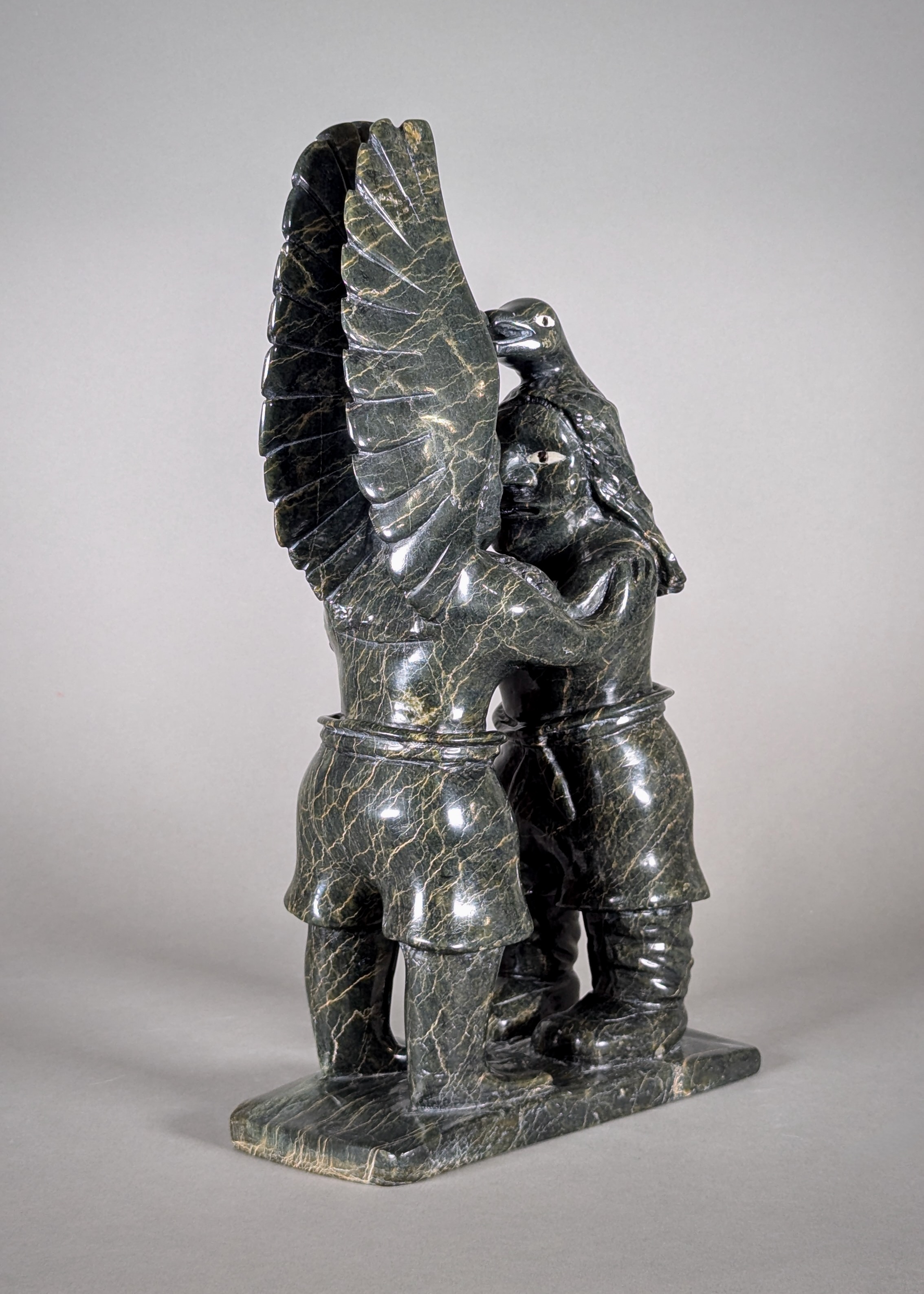
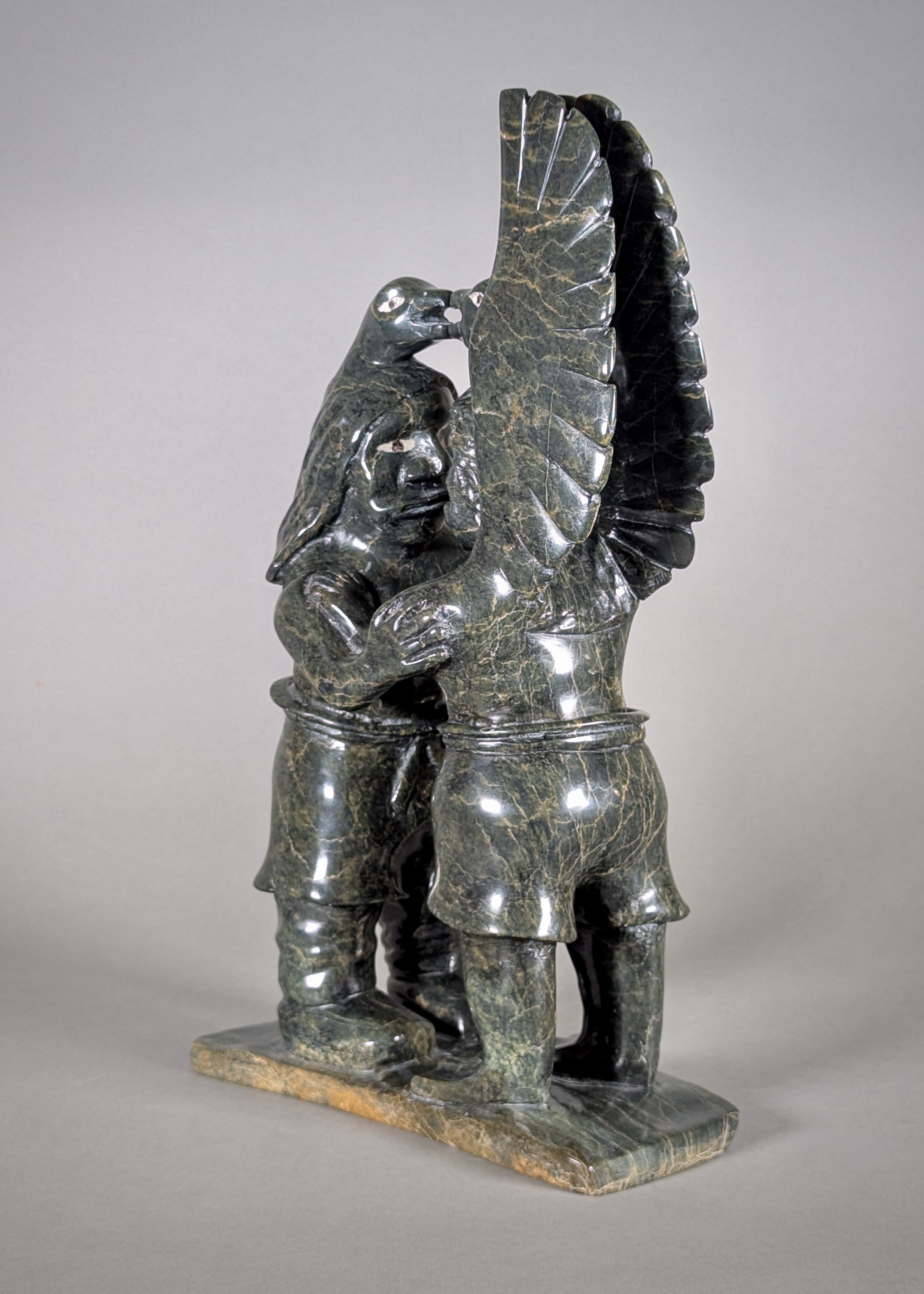
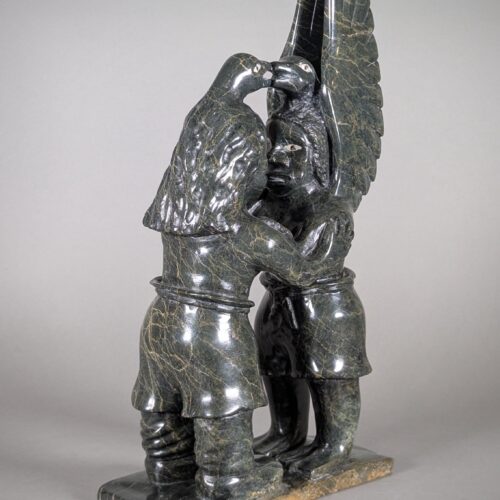
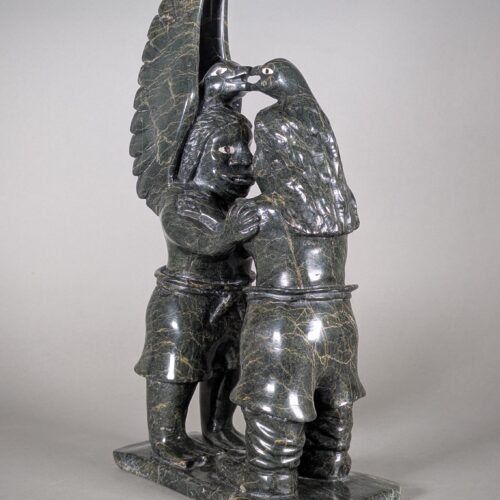
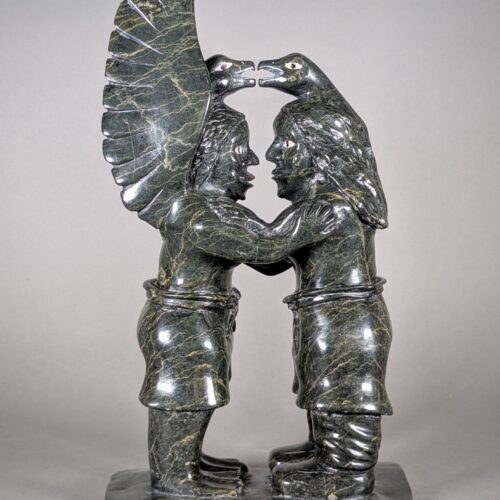
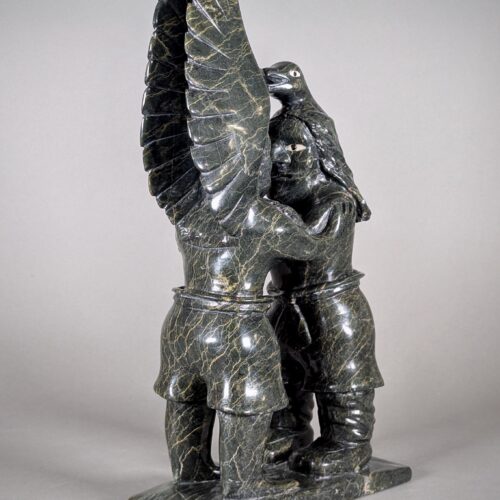
Inuit throat singing, or katajjaq, is a traditional vocal art form deeply embedded in Inuit culture, most authentically performed as a duet by two women—one older and one younger—who stand face-to-face, using rhythmic inhalations, exhalations, and guttural sounds to mimic natural phenomena, animals, and daily life. This intergenerational practice serves as a powerful vehicle for cultural transmission, with the elder woman mentoring the younger through direct imitation and hands-on guidance, passing down not only the complex vocal techniques but also embedded cultural knowledge, values, and a profound connection to the environment. Historically an entertaining and competitive pastime during men’s hunting absences, katajjaq strengthened social bonds, soothed infants, and preserved Inuit identity—especially vital after colonial suppression by missionaries who viewed it as pagan. Today, its revival underscores the resilience of Inuit culture. When performed across generations, the older-younger dynamic explicitly embodies mentorship and continuity, ensuring that oral traditions endure, family ties deepen, and Inuit heritage remains vibrant and living in the face of modern change. Though distinct from shamanic rituals (led by angakkuq to harmonize with spirits), katajjaq shares pre-Christian roots and carries echoes of that spiritual worldview through its evocative sounds.